Trying to tell a modernist building from the rest? The core modernist architecture characteristics are form following function, no ornament, steel, glass and concrete, and open plans. Here is how you can spot each one.
The guide to architecture basics covers the wider vocabulary used below.
| Item | Value |
|---|---|
| Bauhaus school founded by Walter Gropius | 1919 |
| International Style named by Hitchcock and Johnson | 1932 |
| Villa Savoye by Le Corbusier | 1929 |
| Le Corbusier’s points of architecture | 5 points |
| Architects in the CIAM group | 28 European architects |
These figures come from My Modern Met’s overview of modernist styles and BloomWiki’s entry on the International Style. Dates and counts can change as sources are revised, so check the source before you rely on them.
What are the core modernist architecture characteristics?
Modernism took shape in the early 1900s, when architects gained steel, glass and reinforced concrete and began to drop decoration, as ArchitectureCourses.org explains. Six traits show up again and again.
- Form follows function: the design of a building is based on its intended use.
- Minimalism: clean lines, open spaces and no unnecessary ornament.
- New materials: steel, glass and reinforced concrete allow taller buildings and larger open spaces.
- Open floor plans: flexible interiors that can be adapted for various uses.
- Unadorned surfaces: structure and materials are shown rather than hidden.
- Integration with nature: large windows and outdoor spaces link inside and outside.
Not every modernist building shows all six. My Modern Met notes that modern architecture covers many periods and styles, so some factors are not true for all of them.
Form follows function
The phrase form follows function was coined by the architect Louis Sullivan, according to My Modern Met. Its inspiration came from the ancient Roman master Vitruvius, who believed all works should have solidity, usefulness and beauty.
In practice, design becomes a way of solving a spatial problem rather than making art for its own sake. Le Corbusier’s idea of a machine for living comes from the same logic.
No ornament, and honest materials
Modernists saw decoration as a hard sell. A simple, clean solution looked more lasting to them than a detail that could go out of style.
This links to honesty of materials: joints and structural members are left visible so the building is candid about how it was made, as My Modern Met describes it.
Materials that made modernism possible
New materials did more than change the look. According to ArchitectureCourses.org, steel, glass and reinforced concrete allowed new design possibilities, including taller buildings and larger open spaces.
A structural frame carries the load, so walls no longer have to. That freedom explains several features you can see from the street:
- Glass curtain walls that wrap a tower in continuous glazing.
- Ribbon windows set in bands across a facade.
- Cantilevered projections that extend beyond the supports.
- Flat roofs instead of pitched ones.
This list matches the identifiable International Style features recorded by Designing Buildings, which also names rectangular forms, smooth wall surfaces and an asymmetrical facade.
Le Corbusier’s five points in practice
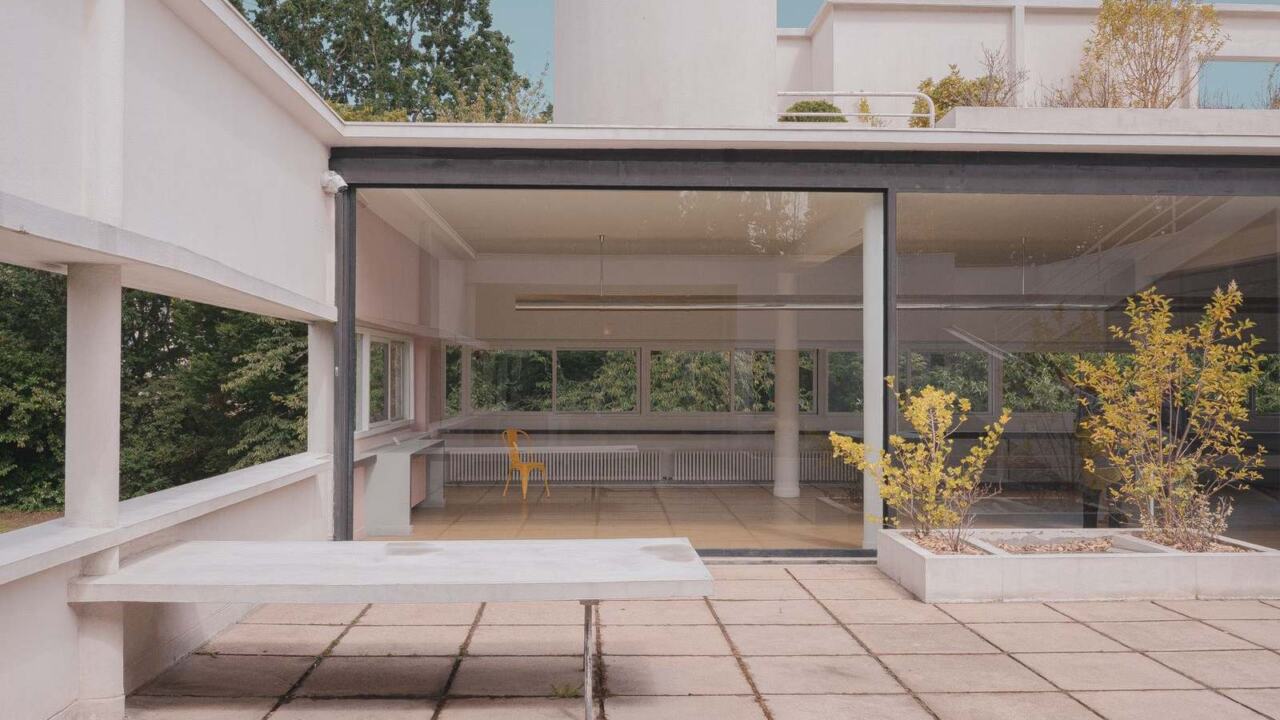
Villa Savoye, dated to 1929 by BloomWiki, incorporates Le Corbusier’s Five Points of Architecture. They read like a checklist of modernist architecture characteristics:
- Pilotis, the supports that lift the building off the ground.
- A roof garden.
- A free plan.
- Ribbon windows.
- A free facade.
Its pilotis, flat roof terrace and horizontal windows highlight modernist principles, according to ArchitectureCourses.org. Fallingwater by Frank Lloyd Wright takes a different route: it is built over a waterfall and blends with its natural surroundings.

Major styles inside modernism
Modernism is a family of styles, not a single look. My Modern Met says people often use the terms modernist style and International Style interchangeably.
- International Style: Designing Buildings says it was born in western Europe in the 1920s from the work of Le Corbusier, Walter Gropius and Mies van der Rohe. The Seagram Building by Mies is a well-known skyscraper example.
- Bauhaus: a school founded in 1919 by Walter Gropius that wanted to make good design accessible to everyone, per My Modern Met.
- Mid-Century Modern: clean lines and a link to nature, seen in the Eames House and Philip Johnson’s Glass House.
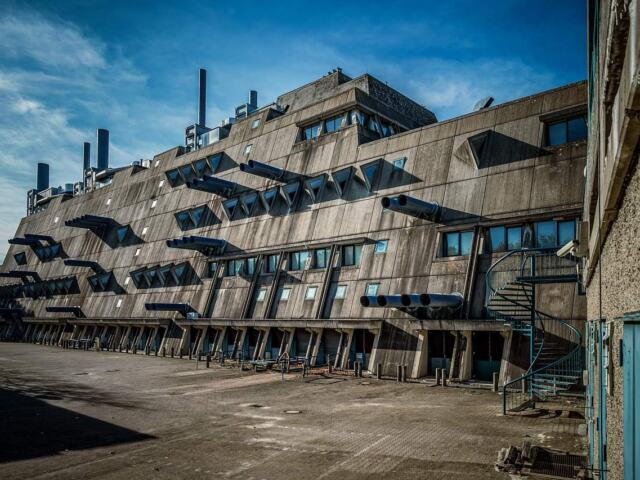
- Brutalism: exposed concrete, bold geometric forms and rough textures.
The name Brutalism comes from the French béton brut, or raw concrete. If you want the full story, read what is brutalist architecture for a closer look.
The group behind much of the early theory was CIAM, which My Modern Met describes as 28 European architects who wrote manifestos defining the rules of this style. The phrase International Style itself dates to 1932 in BloomWiki, which credits Hitchcock and Johnson.
Where modernism bends its own rules
Pure logic is hard to achieve. Mies van der Rohe is known for the phrase less is more, yet he also left I-beams exposed in his projects and painted them white, as My Modern Met points out.
Is that decoration, or is it honesty about the structure? The source suggests it comes down to opinion.
The logic-first attitude is the standard each exception is measured against. Designer Massimo Vignelli described it this way: good design starts by looking at the problem and collecting all the available information about it, and if you understand the problem, you have the solution. My Modern Met quotes him to explain why modernism is more about logic than imagination.
Clean lines follow from the same thinking. Many modernist pieces included flat roofs and other horizontal planes that were shifted to create an effect of overlapping volumes, and the guidelines for that dynamism were left clear and unbroken, as My Modern Met explains.
Strict versions of the International Style gave way to many modern forms and styles, but the new way of looking at the design of buildings remained, according to Designing Buildings. It adds that many schools built at mid century show the basic design principles of the style, so you may find modernist influence in ordinary buildings as well as famous ones.
A quick test helps when a building seems to break the rules. Ask three questions:
- Is the structure visible, or hidden behind a surface?
- Can the plan adapt to different uses?
- Does each detail serve a purpose, or is it only decoration?
The style also travelled unevenly. Designing Buildings says it was less commonly used for houses in the United States, though its functionality and open floor plans could be seen in post-war tract homes.
Turning these ideas into drawings and buildings is the work of a profession, and what does an architect do explains the role in plain terms.
Frequently asked questions
What are the main modernist architecture characteristics?
Show answer
They are form following function, minimal or no ornament, new materials such as steel, glass and reinforced concrete, open floor plans, clean lines and a link to the surroundings. Not every building shows all of them.
Is modernist architecture the same as the International Style?
Show answer
Not exactly. People often use the terms interchangeably, but the International Style is one style within the wider modernist movement, alongside Bauhaus, Mid-Century Modern and Brutalism.
Who coined “form follows function”?
Show answer
The architect Louis Sullivan coined the phrase, according to My Modern Met. It sums up the modernist belief that a building’s design should come from its use.
Why do modernist buildings avoid ornament?
Show answer
Modernists treated decoration as meaningless when it served no purpose. They also hoped plain buildings would be timeless, since an added detail was another chance to go out of style.