If you keep asking what is brutalist architecture, here is the short answer: a post-war style that shows raw concrete and bare structure instead of decoration. You will see how it began, and why it divides opinion.
If you are new to the subject, the architecture basics page gives the wider context for this style.
| Item | Value |
|---|---|
| Term “nybrutalism” coined for Villa Göth | Designed in January 1950 |
| First published use of “new brutalism” | 1953 |
| Hunstanton School completed | 1954 |
| Reyner Banham’s essay The New Brutalism | 1955 |
| Unité d’habitation, Le Corbusier | 12 stories |
| Popularity of the movement began to decline | Late 1970s |
These figures come from Wikipedia’s entry on Brutalist architecture and The Art Story’s history of Brutalism. Dates and descriptions can change as sources are revised, so check the source before you rely on them.
What is brutalist architecture? Raw concrete and honest structure
According to Wikipedia, Brutalist architecture emerged during the 1950s in the United Kingdom, among the reconstruction projects of the post-war era. Its buildings are known for minimalist construction that shows bare materials and structural elements rather than decorative design.
The same Wikipedia entry lists the features you are most likely to notice:
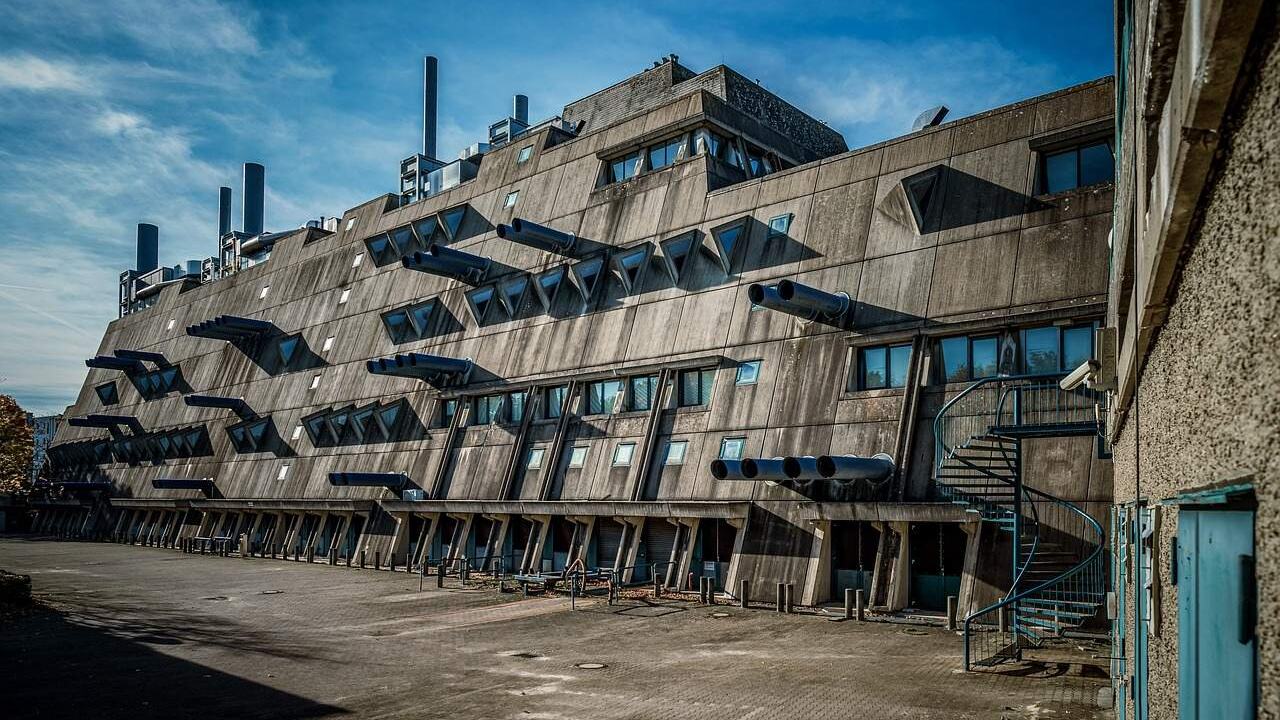
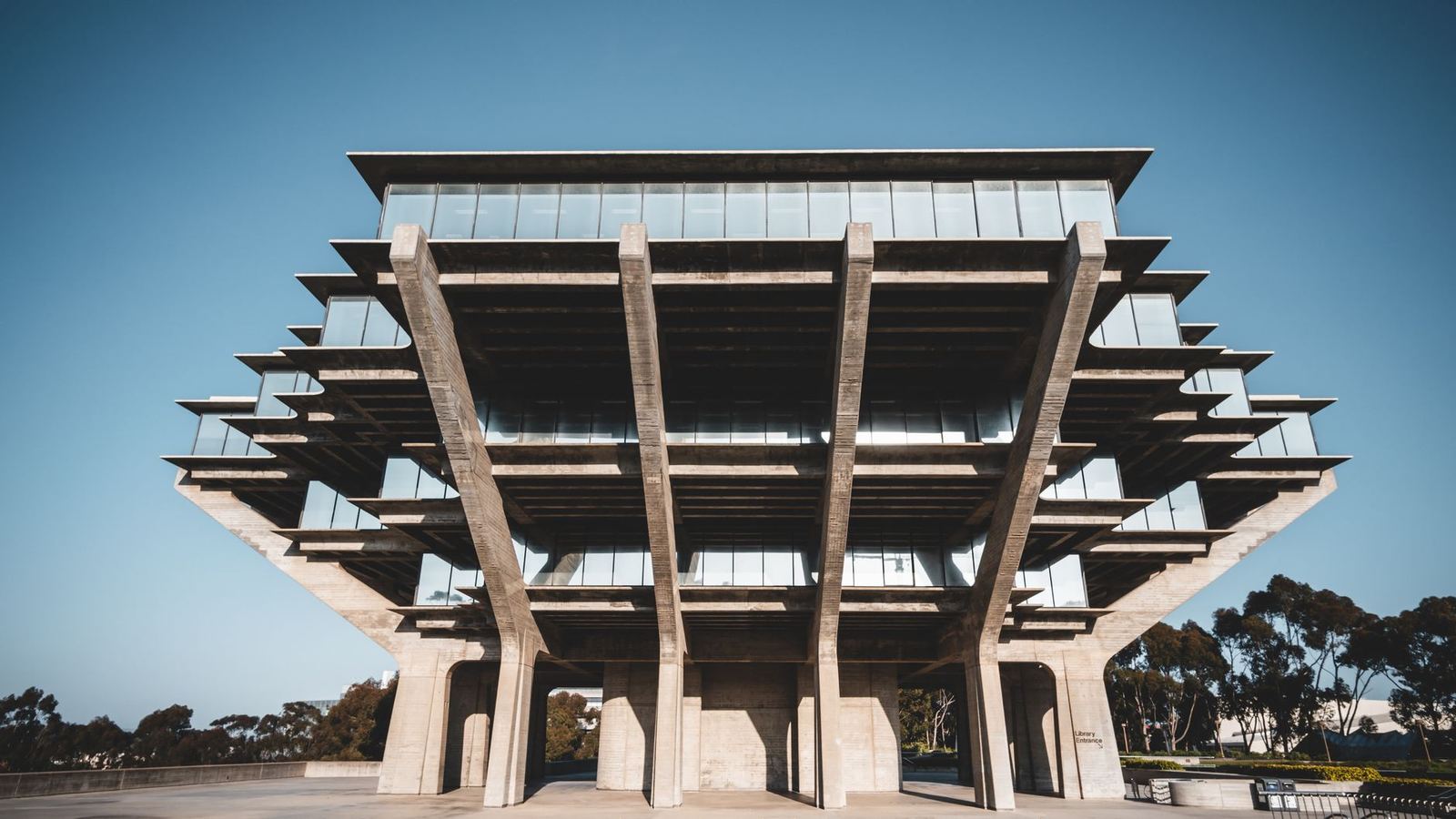
- Exposed, unpainted concrete or brick
- Angular geometric shapes
- A predominantly monochrome colour palette
- Steel, timber and glass used alongside the concrete
The most famous motif is raw concrete, from the French béton brut, as The Art Story explains. Builders left the holes and seamlines made by the setting of liquid concrete visible on the outside of the building.
For Brutalist architects this showed a truth to materials and to the labour of construction. The rough surface was meant as an honest record of how the building was made, not a flaw to hide.
In practice, you can spot the style by its honesty about construction rather than its polish. A bare wall, a visible beam and a rough surface are part of the design, not signs that the building was left unfinished.
Where did the name come from?
The term nybrutalism, or new brutalism, was coined by the Swedish architect Hans Asplund to describe Villa Göth in Uppsala, designed in January 1950, as Wikipedia records. The house shows visible I-beams, exposed brick inside and out, and poured concrete in several rooms.
British architects Alison and Peter Smithson then used the term for their own approach to design. The first published use of the phrase in 1953 came when Alison Smithson described a plan for their unbuilt Soho house.
Their Hunstanton School, completed in 1954 in Norfolk, is notable as the first completed building in the world to carry the title of new brutalist from its own architects. The critic Reyner Banham spread the idea further in his 1955 essay The New Brutalism, according to the same entry.
Banham was blunt about the spirit of it. As The Art Story quotes him, “What characterizes the New Brutalism is precisely its brutality.”
Why did Brutalism take hold after the war?
The style answered an urgent need. The Art Story notes that Europe’s major cities were heavily bomb-damaged, and that slum clearance and a wish to improve ordinary people’s lives inspired large rehousing projects across much of the continent.
Brutalism sought to adapt earlier modernist principles to a post-war world where urban reconstruction was a pressing necessity. With its large scale and cheap materials, it became a style of choice for many of those projects.
In the United Kingdom, Wikipedia says, it appeared in utilitarian, low-cost social housing influenced by socialist principles. In socialist and communist nations it also suited a political message, because traditional styles were associated with the bourgeoisie, whereas concrete emphasized equality.
Brutalist designs were most commonly used for institutional buildings, according to the same entry:
- Provincial legislatures
- Public works projects
- Universities and libraries
- Courts and city halls
Key buildings to know
The Art Story’s history of Brutalism highlights these works, with the dates it gives for each:
- Unité d’habitation (1952)
- Hunstanton Secondary Modern School (1954)
- Boston City Hall (1963-68)
- Breuer Building (1966)
- Trellick Tower (1966-72)
- Habitat 67 (1967)
- Jatiya Sangsad Bhaban, National Parliament House (1962-82)
The Unité d’habitation by Le Corbusier is a good place to start. This 12-story housing complex of modular apartments, raised on massive concrete pylons, is considered by many critics to represent the birth of Brutalism, according to The Art Story.
Le Corbusier also pioneered a vertical garden city idea here, with the services a resident might need built into the structure itself. To see how a building like this organises homes and shared space, it helps to learn how to read a floor plan first.
Brutalism compared with the International Style
Brutalism grew out of earlier modernism, including the International Style, and kept its interest in function and simplicity. If you want the wider background, the modernist architecture characteristics are a useful companion read.
The difference lies in how materials are shown. The Art Story says the International Style often favoured a sleek, streamlined efficiency, doing the most with the least.
Brutalism was more likely to emphasize the brash abundance of its materials, drawing attention to the weight, density and mass of concrete, steel and stone. Where one style tried to look light, the other was happy to look heavy.
Why is Brutalism so controversial?
Brutalism has been polarising historically, says Wikipedia. Specific buildings, and the movement as a whole, have drawn a range of criticism, and are often described as cold.
Part of the problem was association. The popularity of the movement began to decline in the late 1970s, with some people linking the style to urban decay and totalitarianism.
The Art Story adds that, in the decades after its peak, Brutalism became redolent of urban deprivation and decline, largely because of its use in large social housing projects. It dates the movement from 1950 to 1980, while Wikipedia gives the 1950s to the early 1980s, so the exact end point depends on the source you read (The Art Story).
Opinion has not settled. Wikipedia notes there are often public-led campaigns to demolish Brutalist buildings, yet in the United Kingdom some have been preserved. The Art Story describes Brutalism as decidedly back in critical and popular fashion in the twenty-first century.
Frequently asked questions
What is brutalist architecture in simple terms?
Show answer
It is a post-war style known for minimalist construction that shows bare building materials and structural elements, often exposed concrete, instead of decoration, as described by Wikipedia.
Does “brutalist” just mean brutal?
Show answer
Not exactly. The name is tied to the French béton brut, meaning raw concrete, and Banham linked the movement to that phrase, according to Wikipedia. He also said the style is characterised by its brutality, as The Art Story quotes.
When was the Brutalist movement active?
Show answer
The Art Story gives 1950 to 1980. Wikipedia gives the 1950s to the early 1980s.
Which building is seen as the start of Brutalism?
Show answer
Many critics point to Le Corbusier’s Unité d’habitation, a 12-story housing complex listed with the date 1952, according to The Art Story. Hunstanton School, completed in 1954, was the first completed building in the world to carry the new brutalist title from its architects, says Wikipedia.