Wondering what makes mudejar architecture look both Islamic and Christian? It is Christian-commissioned building made with Islamic craft, mostly brick and glazed tile, in Spain from the 12th to the 17th century. Aragon holds its best-known examples.
Mudejar work is one thread in the story of spanish architecture, and this guide follows it through the brick towers and churches of Aragon.
| Item | Value |
|---|---|
| Aragonese Mudejar chronology | 12th to 17th century |
| Teruel Mudejar complex declared a World Heritage Site | 1986 |
| Extension to other Aragonese Mudejar monuments | 2001 |
| Component sites in the UNESCO listing | 10 |
| Tower of Santa María, Calatayud (tallest in Aragon) | 72 m |
| UNESCO selection criterion | Cultural (iv) |
These figures come from Wikipedia’s article on the Mudéjar architecture of Aragon and Google Arts & Culture. Listings and counts can change, so check the sources before you rely on them.
What is mudejar architecture?
The word points to the Mudejars, the Muslims who stayed behind in a territory conquered by Christian power. A common shorthand calls the style Christian architecture executed by Mudejars. Google Arts & Culture warns that this definition is much too simple to explain the complexity of the art.
The same source describes Mudejar art as exclusive to Spain. It says the style developed its own technology over almost five centuries, thanks to the coexistence of traditions and cultures and a mix of building methods.
The Territorio Mudéjar project dates the style between the 12th century, when Christians conquered Muslim-inhabited territory, and the 17th century, when the Moors (Mudejars converted to Christianity) were expelled. It also gives a plain working definition: art made by Mudejars and commissioned by Christians.
How the style grew from conquest to commission
According to Google Arts & Culture, the Islamic tradition had been present in Aragon since the 8th century. It was then folded into new conditions after the Christian conquerors of the 12th century arrived. Christian elites kept commissioning Muslim labour, and that kept the Islamic artistic system alive.
The clients in Aragon were people with the means to pay for skilled work:
- kings
- prelates
- nobles
- priors of military orders
- even a pope, Benedict XIII, known as Pope Luna
The Territorio Mudéjar material on Illueca explains that only the social elite of medieval times could afford buildings of such mastery. Illueca’s castle-palace is linked to Pope Luna, a great patron of Mudejar art. The same page names the master builder Mahoram Rami as Benedict XIII’s favourite and links him to elements of that palace.
The art also grew from shared knowledge. The UNESCO-based story on Google Arts & Culture describes a rich culture created through the exchange of knowledge and experience between Christians, Muslims and Jews.
Brick, tile and towers: how to recognise the look
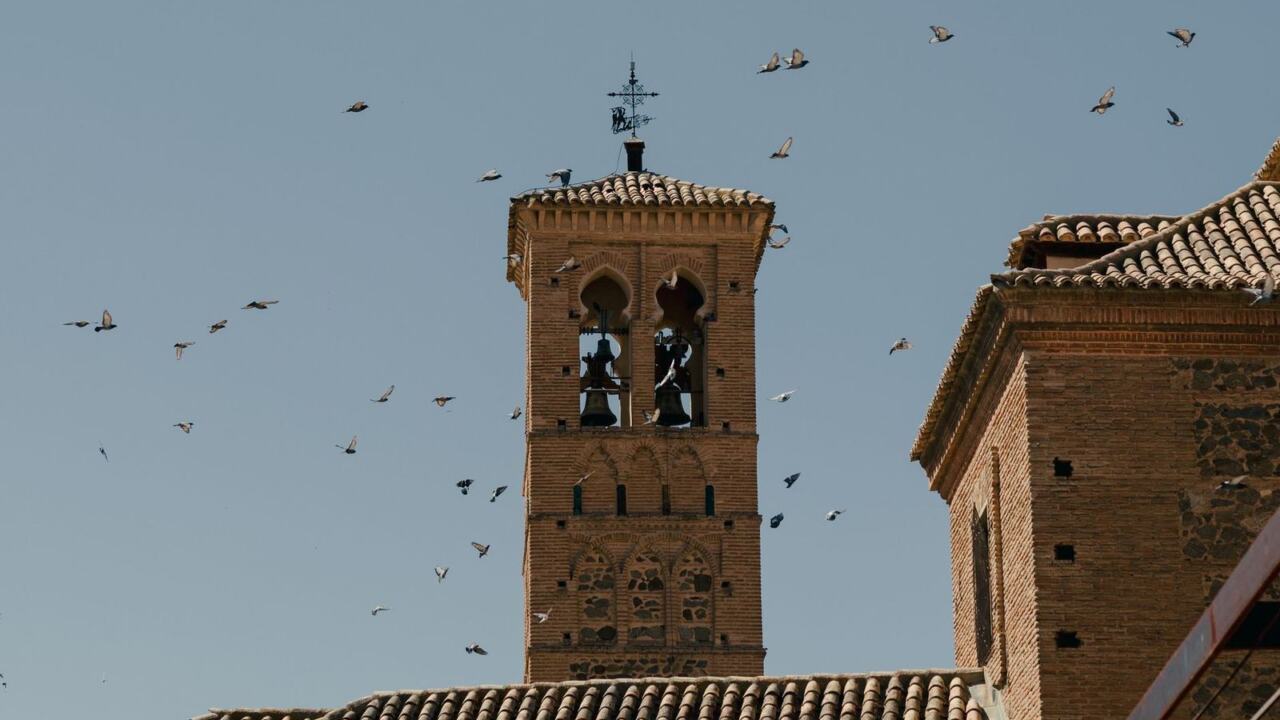
On Wikipedia’s account of Aragonese Mudéjar, several recurring traits stand out. They help you read a building from the street:
- Brickwork in place of stone masonry, often with ornamental tracery.
- Apses with an octagonal floor plan and thick walls that carry the roof’s thrust and leave room for brick decoration.
- Bell towers that inherit the structure of the Islamic minaret.
- Small-town churches where chapels sit between the nave buttresses, sometimes with a walkway; the type is called a church-fortress.
The same article describes a strand of Mudejar that develops Romanesque forms in brick. In Daroca, churches begun in stone were finished in the 13th century with Mudéjar brick panels. If you want the stone-built side of that story, see this guide to romanesque churches in spain.
Colour comes from the ground itself. Google Arts & Culture lists variations of red in clays, shades of white in plaster, wood, iron and the gloss of glazed ceramics. These local materials become towers, churches and palaces in harmony with the landscape.
Aragon’s UNESCO-listed Mudejar sites
According to Wikipedia, UNESCO declared the Mudéjar complex of Teruel a World Heritage Site in 1986. The listing was extended in 2001 to include other Aragonese monuments, and it now covers ten sites in Teruel, Calatayud, Cervera de la Cañada, Tobed and Zaragoza. The cultural criterion (iv) was used, and the same article notes that Spain marked the listing on a 2 euro coin in 2020.
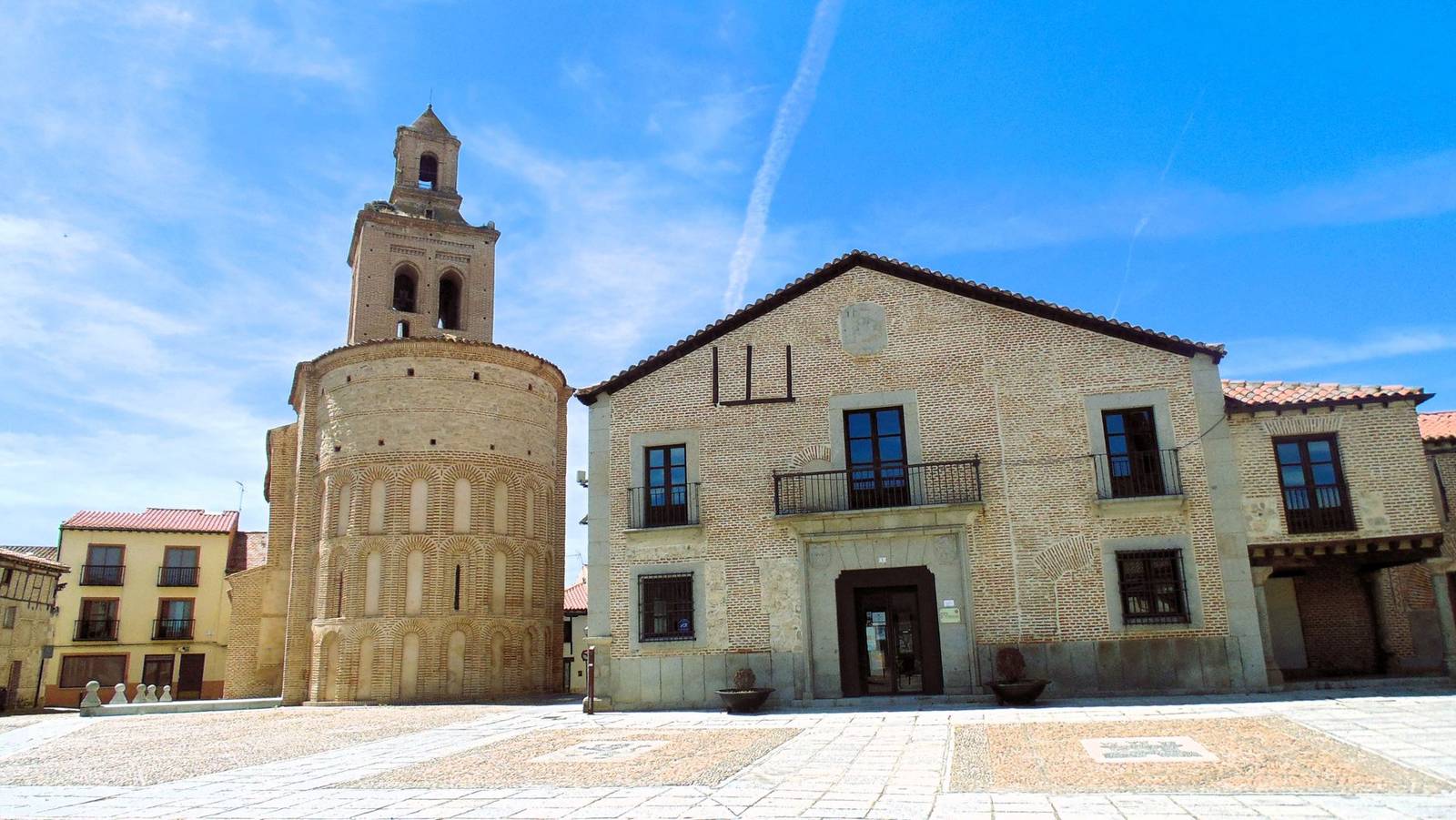
The ten component sites, as listed on Wikipedia, are:
- Teruel: tower, roof and dome of the Cathedral of Saint Mary of Mediavilla
- Teruel: tower and church of San Pedro
- Teruel: tower and church of San Martín
- Teruel: tower of the church of San Salvador
- Calatayud: apse, cloister and tower of the Colegiata de Santa María
- Cervera de la Cañada: parish church of Santa Tecla
- Tobed: church of Saint Mary
- Zaragoza: Mudéjar remains of the Aljafería Palace
- Zaragoza: tower and parish church of San Pablo
- Zaragoza: apse, parish and dome of La Seo
Calatayud’s Santa María is a good place to see the style at full scale. Its tower stands 72 m high, the tallest in Aragon, according to Google Arts & Culture. The same story credits the surviving Mudejar construction there to the master Mahoma Rami.
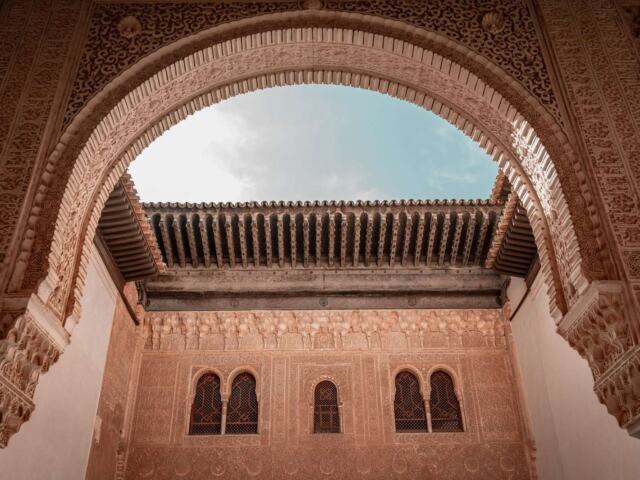
The Aljafería shows the palace side of the story. Wikipedia describes a palatial architecture linked to the monarchy that extended the Aljafería while keeping its Islamic ornamental tradition.
The listing is only part of the picture. Google Arts & Culture calls the inscribed buildings the tip of the iceberg, and Wikipedia counts more than a hundred architectural monuments, mostly in the valleys of the Ebro, Jalón and Jiloca.
After the expulsion: the long afterlife of Mudejar craft
Mudejar architecture as a period ends with the expulsion of the Moors in the 17th century. Its methods did not vanish at once. In Illueca’s parish church of St. John the Baptist, Territorio Mudéjar points to Baroque plasterwork by the master Juan de Marca at the end of the 17th century as a survival of Islamic tradition.
The same page says later buildings kept using Islamic-tradition materials and techniques. It speaks of survival or reminiscences until the 60s of the 20th century. Look at old town streets as well as monuments: the page also describes Jewish-Muslim street layouts in Illueca, with bends that form attractive corners of the façades.
Readers who want to follow Spanish building traditions beyond Europe can continue with spanish colonial architecture.
Frequently asked questions
What does Mudejar mean?
Show answer
It refers to the Mudejars, the Muslims who stayed behind in territory conquered by Christian power. The term also names the art they made for Christian patrons, though Google Arts & Culture cautions that this definition is much too simple.
How many Mudejar sites does UNESCO list in Aragon?
Show answer
The listing includes ten sites, as shown on Wikipedia. Teruel was declared in 1986 and the others were added in the 2001 extension.
What is the tallest Mudejar tower in Aragon?
Show answer
The tower of the collegiate church of Santa María in Calatayud stands 72 m high and is the tallest in Aragon, per Google Arts & Culture.
When did Mudejar architecture begin and end?
Show answer
The Aragonese chronology runs from the 12th to the 17th century, according to Wikipedia. Territorio Mudéjar adds that reminiscences of its techniques lasted until the 60s of the 20th century.