Moorish architecture in Spain can feel overwhelming when every site seems to have the same arches. Look for horseshoe arches, geometric decoration and running water. Once you spot them, Córdoba, Seville and Granada start to make sense.
This guide is part of a wider look at spanish architecture.
| Item | Value |
|---|---|
| Length of Muslim rule in Spain | Over 780 years |
| Mosque of Córdoba, construction period | Between 786 and 988 |
| Year Granada and the Alhambra passed to Christian rulers | 1492 |
| Medina Azahara excavated so far | 10% of the surface within the city walls |
| Giralda, portion of Muslim construction | Lower two thirds of the tower |
The figures come from Fascinating Spain (page updated 8 September 2025) and Mapping Spain. They can change, so check the source before you rely on them.
What counts as Moorish architecture in Spain?
The Moors crossed from North Africa in 711 AD and quickly took over most of southern Spain, according to Mapping Spain. Granada was the last Muslim stronghold and fell in 1492, which ended over 780 years of Muslim rule.
“Moorish” is a loose label. The travel company Rabbies notes it was the term Christian Europeans used for people of Muslim descent in the Maghreb and Al-Andalus, and calls the term somewhat outdated.
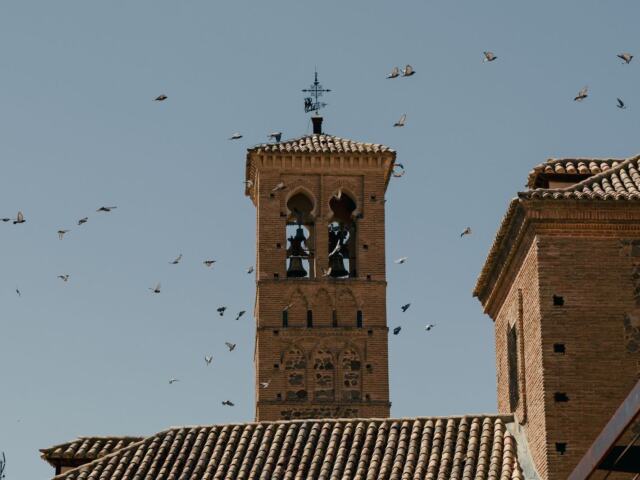
A related word is Mudéjar. TheCollector defines it as architecture carried out for Christian patrons by Muslim craftsmen, using elements such as Arabic calligraphy and the horseshoe arch.
Three features recur across the major sites:
- Horseshoe arches, often stacked on columns.
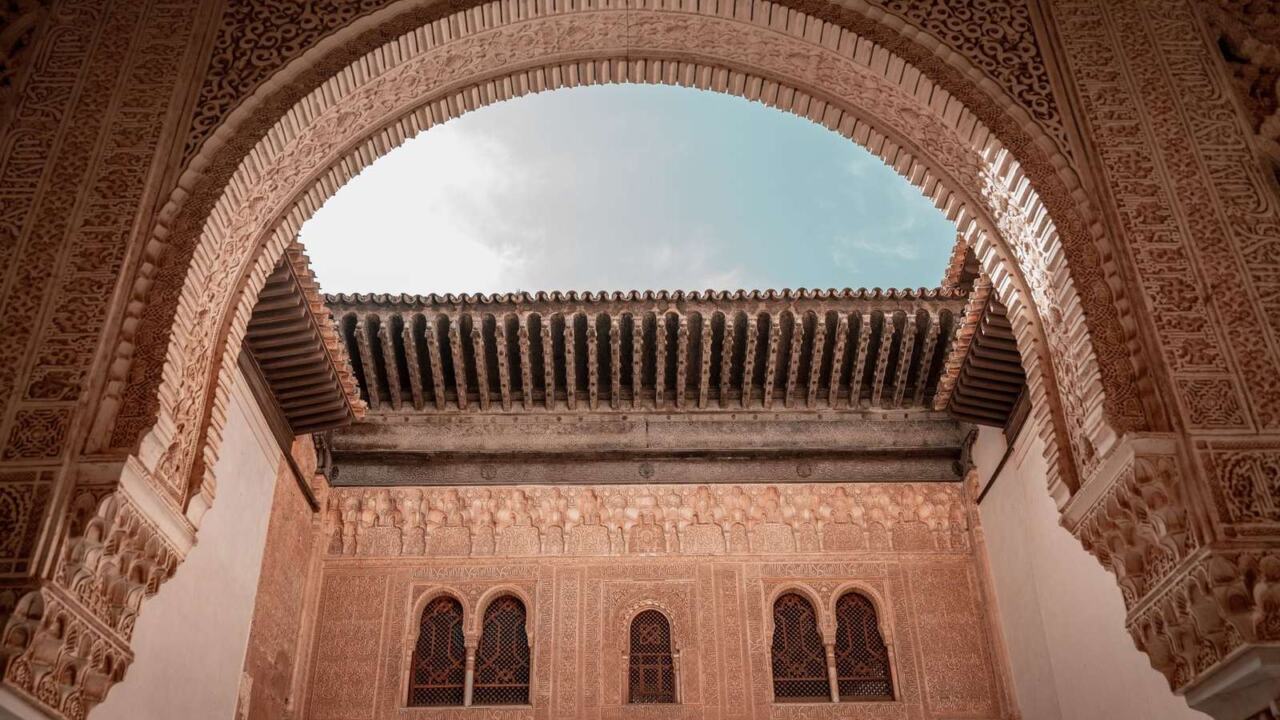
- Surfaces covered in geometric patterns, vegetal scrolls and calligraphy.
- Water, moved through courtyards, gardens, channels and baths.
The horseshoe arch and the column forest at Córdoba
The Mosque of Córdoba was built between 786 and 988, according to Fascinating Spain. The same source says Amir Abd al-Rahman I promoted its construction.
TheCollector calls the two-tier free-standing horseshoe arches resting on columns the most remarkable feature of the building. It also describes a 10th-century mihrab (prayer niche) as an octagonal chamber set into the qibla wall with a massive ribbed dome supported on arches.
The building changed after the Christian reconquest. Fascinating Spain’s page says it served as a cathedral since 1236, while TheCollector places the construction of a cathedral in the middle of the sanctuary in the 16th century, with the old minaret now encased in the cathedral’s bell tower.
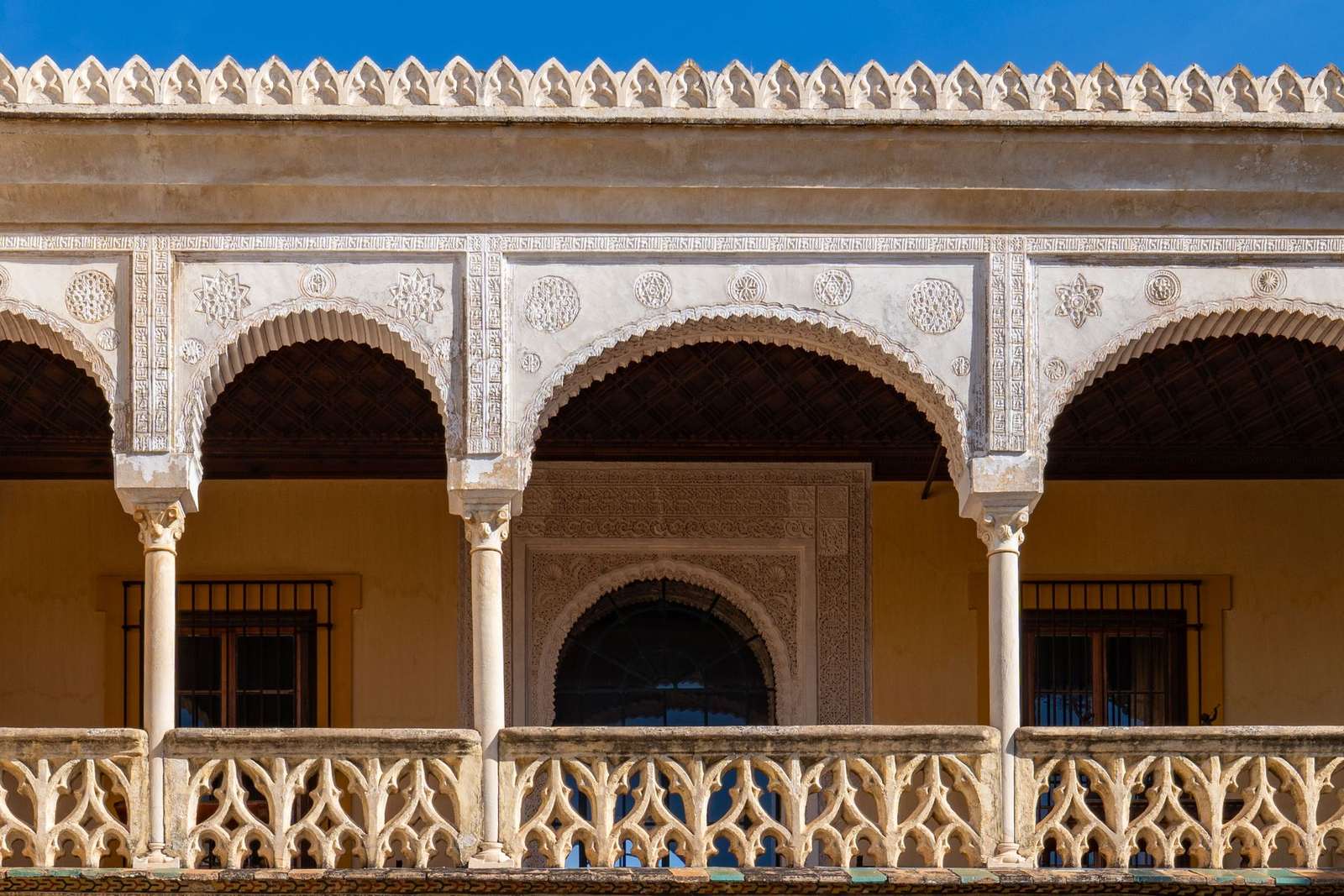
Geometry, calligraphy and tilework
Surfaces tell you as much as arches do. TheCollector lists symmetrically arranged vegetal scrolls and complex geometric patterns as usual motifs of Islamic and Moorish art, seen at the 10th-century palace-city of Madinat al-Zahra.
At the Alhambra you can walk among columns and arches in the Andalusi style, decorated with quotes from the Koran, says Fascinating Spain. It dates the surviving splendour of its gardens, fountains and geometric decoration to the 14th century, when the Nasrid kingdom moved to Granada.
Tiles do much of the work in Seville. The Torre del Oro owes its name to the golden reflections of the tiles that once covered it, and its first body was built in 1221 under the Almohad governor Abù l-Ulà, per Fascinating Spain. The same page describes the Patio de las Doncellas and Patio de las Muñecas in the Real Alcázar as decorated with Mudejar tiles and ceilings.
Mapping Spain credits the ceilings, arches, tilework and gardens for the Real Alcázar’s level of detail. TheCollector adds that many masons and craftsmen for the 14th-century palace of Peter of Castille were hired from Granada, which explains some similarities with the Alhambra.
Water: gardens, cisterns and baths
Water is part of the design, not decoration added later. The sources point to several forms:
- Gardens and fountains: Fascinating Spain says the Alhambra’s gardens keep the predominant hydraulic system of Muslim architecture, and that the Real Alcázar of Seville is brought to life by its gardens and the water of its fountains and ponds.
- Channels and cisterns: at the Alcazaba of Almería, water pours through trenches that water the gardens, and it still originates from cisterns built by the Moors, writes Mapping Spain, which calls this an incredible piece of engineering.
- Baths: Fascinating Spain notes that the Ronda hamman is one of the best preserved in Spain and that such baths hold a great deal of knowledge about the daily life of Muslim societies.
Where to see Moorish architecture in Spain
Córdoba and Medina Azahara
Beyond the mosque, Medina Azahara lies eight kilometres from Córdoba, per Fascinating Spain. As of that page’s September 2025 update, only 10% of the surface area within the city walls has been excavated.
TheCollector says the site was destroyed in 1010 during a Berber revolt, and that some of its materials were later reused by Peter of Castille (Pedro the Cruel) for his palace in Seville.
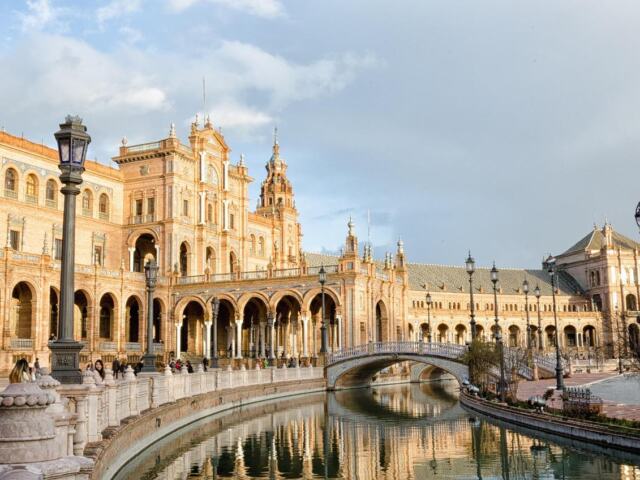
Seville
The Giralda is now the cathedral’s bell tower but was originally the minaret of the mosque, and the lower two thirds are of Muslim construction, according to Fascinating Spain. Mapping Spain adds that you climb ramps rather than stairs, a design meant to let officials reach the top on donkeys or horses.
The Real Alcázar is a palace complex with a defensive character and one of the most important Hispano-Moorish monuments in Seville, according to Fascinating Spain.TheCollector says it was rebuilt as the palace of Peter of Castille in the 14th century.
Granada
The Alhambra was the last territory to remain under Muslim rule until 1492, when Boabdil handed it over, says Fascinating Spain. The same page notes that Napoleonic troops blasted parts of it in the 19th century and almost destroyed the enclosure completely. The alhambra architecture history guide covers the palace city in more depth.
Beyond the big three
- Aljafería, Zaragoza: a fortified medieval palace built in the second half of the 11th century, and the residence of Aragon’s Christian kings once Zaragoza was reconquered in 1118, per Mapping Spain.
- Alcazaba, Almería: described by the same source as the 2nd largest Moorish fortress in Spain after the Alhambra.
- Ronda baths: one of the best preserved hammams in Spain, per Fascinating Spain.
If you want a contrast with a later Spanish tradition, read about gaudi buildings in barcelona.
Frequently asked questions
What is the difference between Moorish and Mudéjar architecture?
Show answer
Moorish is the broad label for architecture from Muslim-ruled Spain. Mudéjar is the narrower term for buildings made for Christian patrons, so a Mudéjar palace can look Islamic while dating from Christian rule.
When did Moorish rule in Spain begin and end?
Show answer
According to Mapping Spain, the Moors crossed from North Africa in 711 AD, and the conquest of Granada in 1492 ended over 780 years of Muslim rule.
Which site shows the horseshoe arch best?
Show answer
The Mosque of Córdoba is the usual answer, because its rows of horseshoe arches rise from a dense field of columns across the prayer hall.
How did Moorish builders use water?
Show answer
In gardens, fountains, ponds, channels, cisterns and baths. Mapping Spain notes that water at the Alcazaba of Almería still originates from cisterns built by the Moors.
Is Moorish architecture only in Andalusia?
Show answer
No. Mapping Spain says the most famous sites are in Andalusia but Moorish remains exist in all parts of Spain, and it lists Aljafería in Zaragoza as one of the northernmost outposts of Al-Andalus.