Planning to see Romanesque churches in Spain and not sure where to start? Begin in the Vall de Boí, Catalonia, where eight churches and one hermitage, built in the 11th and 12th centuries, share one Lombard-inspired style.
This page is one part of the wider topic of spanish architecture, focused on its medieval churches.
| Item | Value |
|---|---|
| UNESCO World Heritage decision | 30 November 2000 |
| Vall de Boí ensemble | Eight churches and one hermitage |
| Construction period | 11th and 12th centuries |
| Stylistic model | Lombard Romanesque, from northern Italy |
| UNESCO criteria met | Criteria (ii) and (iv) |
| Original wall-painting murals kept at | MNAC, Barcelona |
Figures come from the Centre del Romànic de la Vall de Boí and the Vall de Boí official site. Dates and opening arrangements can change, so check the source before you rely on them.
What defines Romanesque churches in Spain?
Romanesque is the main medieval church style of the 11th and 12th centuries in the Vall de Boí, and that valley shows its features unusually clearly. The sources behind this guide cover that valley in the Catalan Pyrenees, so it is used here as the worked example.
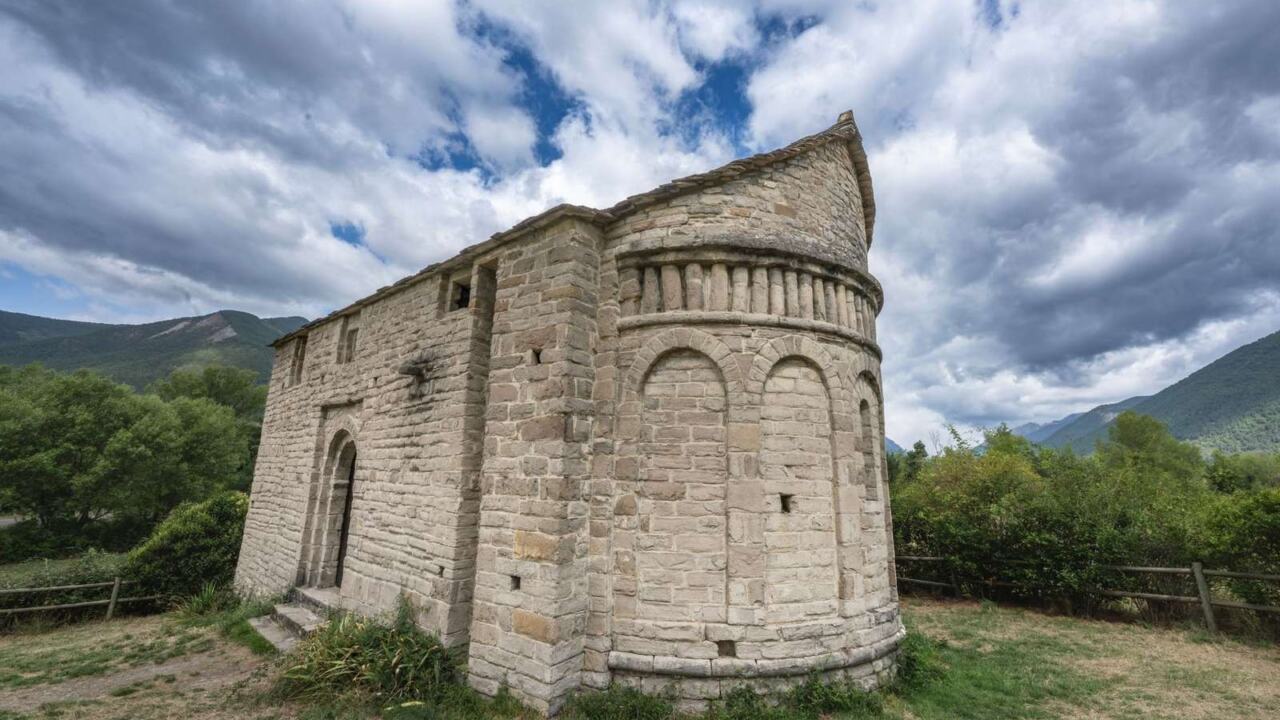
According to the Vall de Boí official site, the temples follow a model imported from northern Italy, the Lombard Romanesque. Look for these traits when you visit:
- Functional buildings with no unnecessary ornament.
- Skilled stonework, often with carefully cut blocks.
- Thin bell-towers beside the church.
- Exterior decoration of rounded arcading and pilaster strips, also described as Lombard bands and blind arches.
The same official site notes that the buildings were all raised in the 11th and 12th centuries. That shared date range is why the valley reads as a coherent group rather than a scatter of unrelated churches.
Why the Vall de Boí stands out
The valley sits in the region of Alta Ribagorza, in the province of Lleida, as Fascinating Spain describes it. Its Romanesque heritage is exceptional because a large number of churches of the same style stand concentrated in a small area.
Isolation helped. A Catalan News report from November 2020 says the isolation of the Boí valley allowed buildings and paintings from the 11th and 12th centuries to be extraordinarily well preserved.
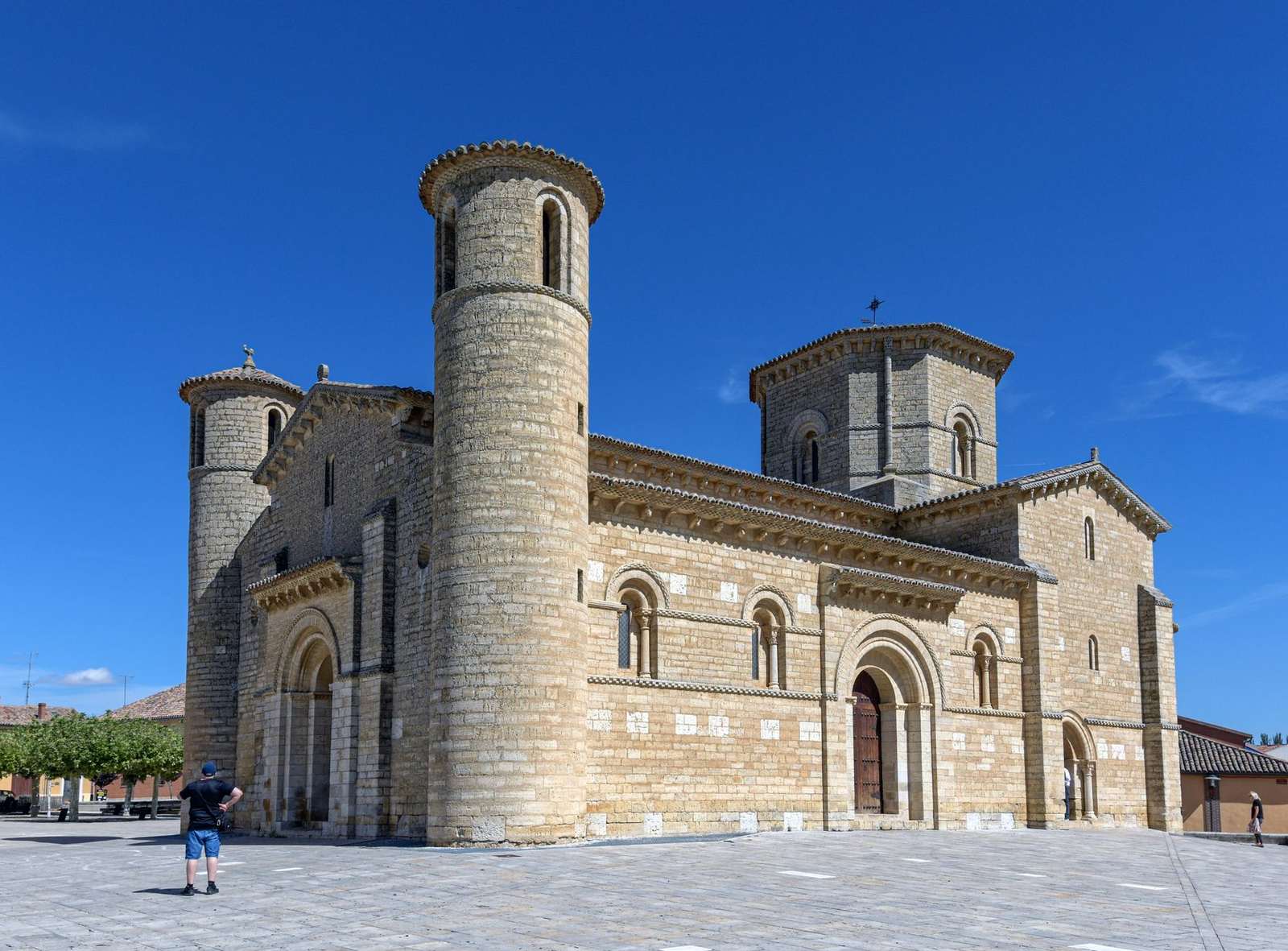
The churches also reflect the society that built them. The Vall de Boí official site names the Lords of Erill and the bishopric of Roda de Isábena as the promoters, in a world structured around feudalism and the clergy.
A church was more than a place of worship. It was also a meeting place and refuge, and in this valley the thin bell-towers served as a means of communication and protection.
The churches of the Vall de Boí
The ensemble listed by the Vall de Boí official site is made up of these buildings:
- Sant Climent and Santa Maria in Taüll
- Sant Joan in Boí
- Santa Eulàlia in Erill la Vall
- Sant Feliu in Barruera
- La Nativitat in Durro
- Santa Maria in Cardet
- L’Assumpció in Cóll
- Sant Quirc Hermitage, also in Durro
Sant Climent de Taüll
According to Fascinating Spain, it is the model of a Romanesque church with a basilica floor plan: a belfry tower, three naves separated by columns, a chevet with three apses and a wooden gabled roof. The same article calls it perhaps the most outstanding church in the valley.
Sant Joan de Boí and Sant Feliu de Barruera
Sant Joan has the largest number of architectural elements typical of the 11th century, the first construction period in the valley. Sant Feliu in Barruera, by contrast, concentrates elements from both important building periods, the 11th and 12th centuries, as Fascinating Spain explains.
L’Assumpció de Cóll and La Nativitat de Durro
The Cóll church is a 12th-century temple built with well-carved ashlars. It was consecrated in 1110 and once belonged to a Benedictine monastery, according to Fascinating Spain.
The Durro church was reformed between the 16th and 18th centuries, which added a Baroque sacristy and two Gothic chapels. It is a reminder that a Romanesque building can carry later layers.
Murals, carvings and the Taüll Pantocrator
The painted murals that used to hang in Sant Climent and Santa Maria in Taüll and in Sant Joan in Boí are kept at the National Museum of Catalan Art (MNAC) in Barcelona, as the Vall de Boí official site states. So a visit to the valley and a visit to Barcelona complement each other.
The valley also has notable carvings by the Erill workshop, particularly the Descent in the church of Santa Eulàlia in Erill la Vall. Fascinating Spain adds that the Pantocrator of Sant Climent has been the representative image of Catalan Romanesque, with the original now in the museum.
Inside Sant Climent, a video mapping projection shows the paintings of the main apse and how the church looked in the 12th century. That gives you a sense of the colour that bare stone walls no longer show.
How the churches were protected
The Centre del Romànic de la Vall de Boí sets out the stages of recognition:
- 1931: Sant Climent and Santa Maria in Taüll were declared a Historical and Artistic Monument.
- 1962: the declaration was extended to Sant Joan in Boí and Santa Eulàlia in Erill la Vall.
- 1992: the Generalitat de Catalunya declared the entire group an Asset of Cultural Interest.
- 2000: UNESCO included the group on the World Heritage List.
As of the World Heritage Committee decision of 30 November 2000, the listing rests on two criteria. Criterion (ii) recognises cultural interchange across medieval Europe and the Pyrenees, and criterion (iv) recognises an especially pure and consistent example of Romanesque art in a virtually untouched rural setting.
Planning a visit
Check access before you go. The Centre del Romànic notice on its World Heritage page says roof conservation works at Sant Climent de Taüll are expected to continue until the end of spring 2027, and the church will be closed to the public meanwhile.
Tourism has changed the valley. The Catalan News report quotes the mayor saying the population rose from 800 to 1,100 after the 2000 listing, and the churches attracted two million visitors in 20 years.
Not every Romanesque church there is on the World Heritage List, so ask locally about the others. If you want a different medieval Spanish tradition afterwards, read about mudejar architecture, and for a later Catalan chapter see catalan modernisme architecture.
Frequently asked questions
Where can you see the best-documented Romanesque churches in Spain?
Show answer
The Vall de Boí in Alta Ribagorza, province of Lleida, is the group covered in this guide. Its eight churches and one hermitage were inscribed by UNESCO on 30 November 2000, according to the Centre del Romànic.
What is Lombard Romanesque?
Show answer
It is the model imported from northern Italy and used in the valley. The Vall de Boí official site describes it by functional buildings, skilled stonework, thin bell-towers and rounded arcading with pilaster strips.
Where are the original Taüll murals?
Show answer
The murals from Sant Climent and Santa Maria in Taüll and Sant Joan in Boí are kept at MNAC in Barcelona, according to the Vall de Boí official site.
Can you visit Sant Climent de Taüll right now?
Show answer
Check first. The Centre del Romànic notice says the church will be closed to the public during roof works expected to last until the end of spring 2027.
Are all the Romanesque churches in the valley World Heritage Sites?
Show answer
No. Fascinating Spain notes that other Romanesque churches in the valley have not been awarded World Heritage status.