Planning a trip and wondering which Gaudi buildings in Barcelona deserve your time? Seven of his works are UNESCO-listed, from Casa Vicens to the Sagrada Família crypt and Nativity façade, and each shows a different side of his style.
This guide sits within the wider topic of spanish architecture.
| Item | Value |
|---|---|
| Gaudí works on the UNESCO list | 7 buildings |
| First UNESCO inscription | 1984 |
| Park Güell area | 12 hectares |
| Casa Vicens built | 1883-1888 |
| Casa Batlló built | 1904-1906 |
| Casa Milà built | 1906-1912 |
The figures come from the Park Güell official website and from Casa Batlló’s page on Gaudí’s works. Listings and dates can change, so check the source before you rely on them.
The seven UNESCO-listed Gaudí buildings in Barcelona and nearby
According to the Park Güell official website, seven buildings designed by Antoni Gaudí (1852-1926) in Barcelona or its surrounding area were added to the World Heritage List in 1984 and 2005. Together they are described as proof of his contribution to architecture and construction techniques in the late 19th and early 20th centuries.
The seven are:
- Park Güell
- Palau Güell
- Casa Milà (La Pedrera)
- Casa Vicens
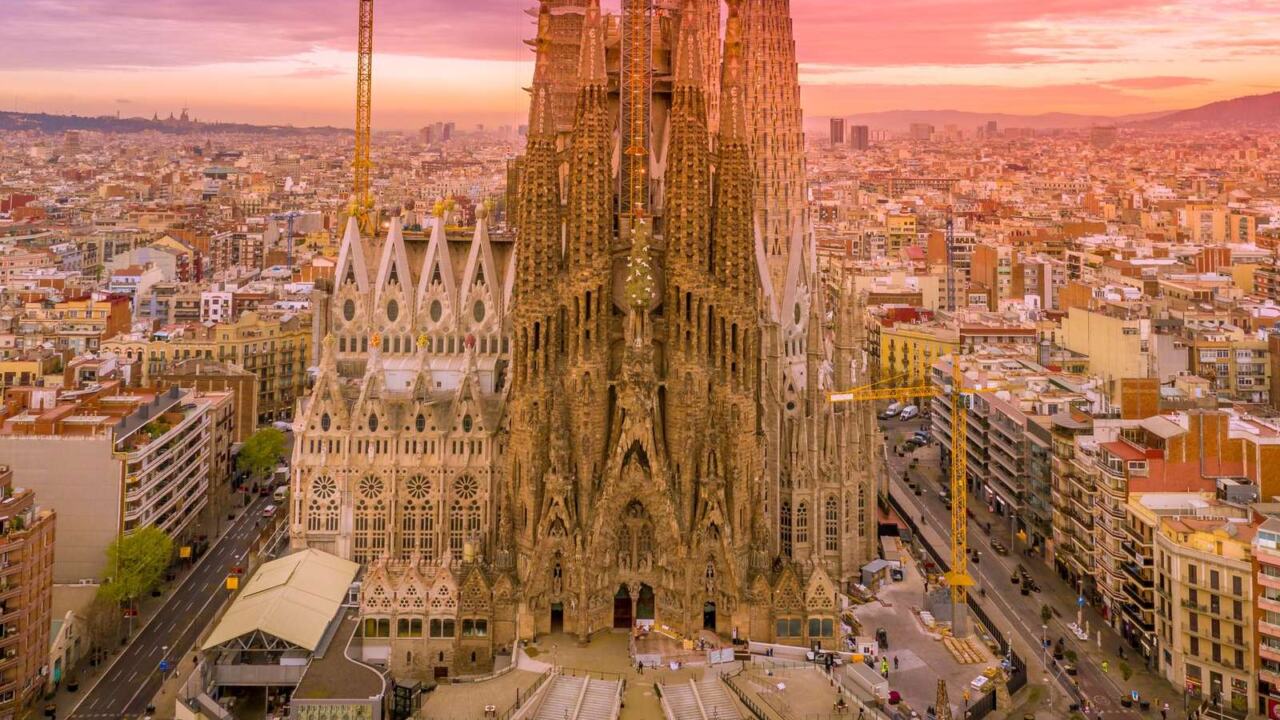
- Gaudí’s work on the Nativity façade and crypt of the Sagrada Família
- Casa Batlló
- The crypt of Colònia Güell
Read the Sagrada Família entry carefully: it covers Gaudí’s work on the Nativity façade and crypt, not the whole church. The Colònia Güell church sits outside the city, in Santa Coloma de Cervelló, according to Casa Batlló’s timeline of his works.
The order of recognition is worth knowing. As of the Gaudí World Foundation’s October 2024 post, the first UNESCO recognition in 1984 covered Parc Güell, Palau Güell and Casa Milà, with the Nativity façade and crypt, Casa Vicens and Casa Batlló added later.
Why does the listing matter? The Park Güell site explains that the World Heritage distinction goes to natural areas and cultural features of great value that must be protected, so that future generations can continue to enjoy them. For a visitor, it is a quick way to see which of his works carry the strongest recognition.
The list also spans very different building types, which helps when you plan a route. You can group the seven like this:
- In the city streets: Casa Vicens, Casa Batlló, Casa Milà and Palau Güell, all placed in Barcelona by Casa Batlló’s timeline.
- A landscape: Park Güell, a site of 12 hectares.
- Religious work: the Nativity façade and crypt of the Sagrada Família, plus the Colònia Güell crypt.
The dates also vary widely. Casa Vicens (1883-1888) and Palau Güell (between 1883 and 1890) come from his early career, while Park Güell and the Colònia Güell crypt (1900-1914) come later, according to Casa Batlló’s page on his works.
That mix is no accident. The Park Güell site says Gaudí used his eclectic and very personal style in gardening, sculpture and decorative arts as well as architecture, which is why a park and a crypt sit on the same list as townhouses.
The Gaudí World Foundation adds that his works blend craftsmanship with advanced structural techniques. Its October 2024 post marked 40 years since the first recognition, and it argues that his respect for natural surroundings fits today’s sustainability goals, which is the foundation’s own view.
Early works: Casa Vicens and Palau Güell
Casa Vicens (1883-1888) was Gaudí’s first major project. Casa Batlló’s account of his career says it was clearly influenced by Oriental architecture, which fascinated him while Arab-style salons were spreading through the city.
With it, Gaudí moved beyond his professors, who were aligned with historicism and romanticism. A wider look at Arab-influenced design in the country is in this guide to moorish architecture in spain.
The same source says one of his professors, Joan Martorell, introduced him in 1883 to Eusebi Güell, a prominent figure of the Catalan bourgeoisie who became his main patron. For Güell he created Finca Güell and the Palau Güell (between 1883 and 1890), and later Park Güell and the Colònia Güell crypt (1900-1914).
Casa Batlló and Casa Milà: the Modernist peak
Much of Gaudí’s work came from the Catalan bourgeoisie, who returned from Cuba with money after Spain lost the island in 1898, according to Casa Batlló’s page on his works. That wealth, plus a young generation of architects, fed Catalan Modernism.
Casa Calvet (1898-1900) is the cautious one: a baroque-style building and the most conservative of his works. It makes a useful contrast with what followed.
Casa Batlló (1904-1906) is described there as Gaudí’s only 100% Modernist work, inspired by the Mediterranean Sea and made with total creative freedom. He completely overhauled an existing building that had been designed by another of his professors, Emilio Sala.
Casa Milà (1906-1912) closes this period. The same source says it was conceived more as a modern house than a modernist one.
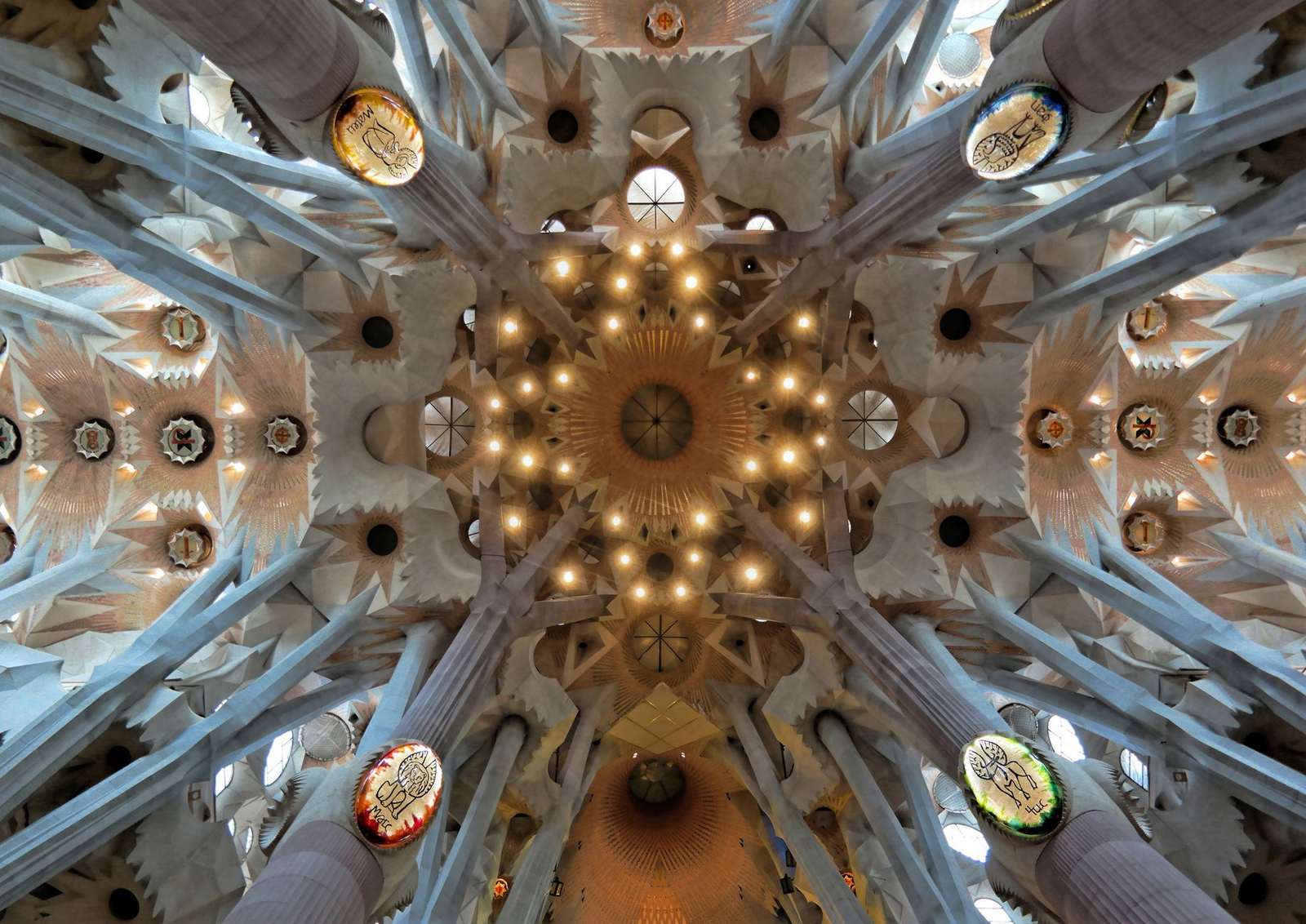
Park Güell and the Sagrada Família: the later years
Park Güell covers 12 hectares, per the Park Güell official website. The Spanish state declared it a Monument of Cultural Interest in 1969, and UNESCO declared it a World Heritage Site in 1984.
From 1912 until his death in 1926, Gaudí gave up other pursuits to focus exclusively on the Sagrada Família, a project he had already worked on for 30 years, according to Casa Batlló’s biography page. Its construction began in 1882, and the same page notes that he took over a project previously led by his professor Francisco del Villar.
If you want a very different Spanish landmark to compare, guggenheim museum bilbao architecture shows how another building became a city symbol.
What makes Gaudí’s buildings distinct?
The Park Güell site calls his work the expression of an eclectic and very personal style, used not only in architecture but also in gardening, sculpture and other decorative arts. Several features recur across the list:
- Natural forms, geometry and organic shapes instead of strict historic styles.
- A mix of architecture, nature and religion, as the Gaudí World Foundation puts it.
- Innovative construction techniques that the foundation links to Catalan Modernism.
- Decoration treated as part of the building, from lamps and furniture to sculpture.
Style also shifts with the commission. Casa Vicens leans Oriental, Casa Calvet is baroque, Casa Batlló is fully Modernist, and the late years centre on one church.
Frequently asked questions
How many Gaudí buildings are UNESCO World Heritage Sites?
Show answer
Seven, listed in 1984 and 2005, according to the Park Güell official website. The Sagrada Família entry covers his Nativity façade and crypt only.
Which Gaudí building is the most Modernist?
Show answer
Casa Batlló (1904-1906) is described as his only 100% Modernist work on Casa Batlló’s own page, so treat that as the operator’s view.
Is Park Güell a World Heritage Site?
Show answer
Yes. The Park Güell official website says it has been a World Heritage Site since 1984, along with other Gaudí works.
Did Gaudí start the Sagrada Família?
Show answer
No. Construction began in 1882 under another architect, and Gaudí was offered the chance to continue it, per Casa Batlló’s page. He later focused on it exclusively from 1912 until 1926.